
Clearing Stumps to Reclaim Usable Ground
Stump Grinding in Williamsburg for properties with remnants from tree removal or clearing projects
A stump occupies square footage that could support landscaping, prevents mowing in a clean pattern, and creates a tripping hazard in areas where foot traffic or equipment operation occurs regularly. Stumps left in place send up sucker shoots each growing season, requiring repeated cutting, and the decaying wood attracts insects including carpenter ants and termites that may eventually migrate toward structures. Grinding removes the stump below ground level and eliminates the obstruction, allowing you to reclaim that section of the yard for other uses without waiting years for natural decomposition.
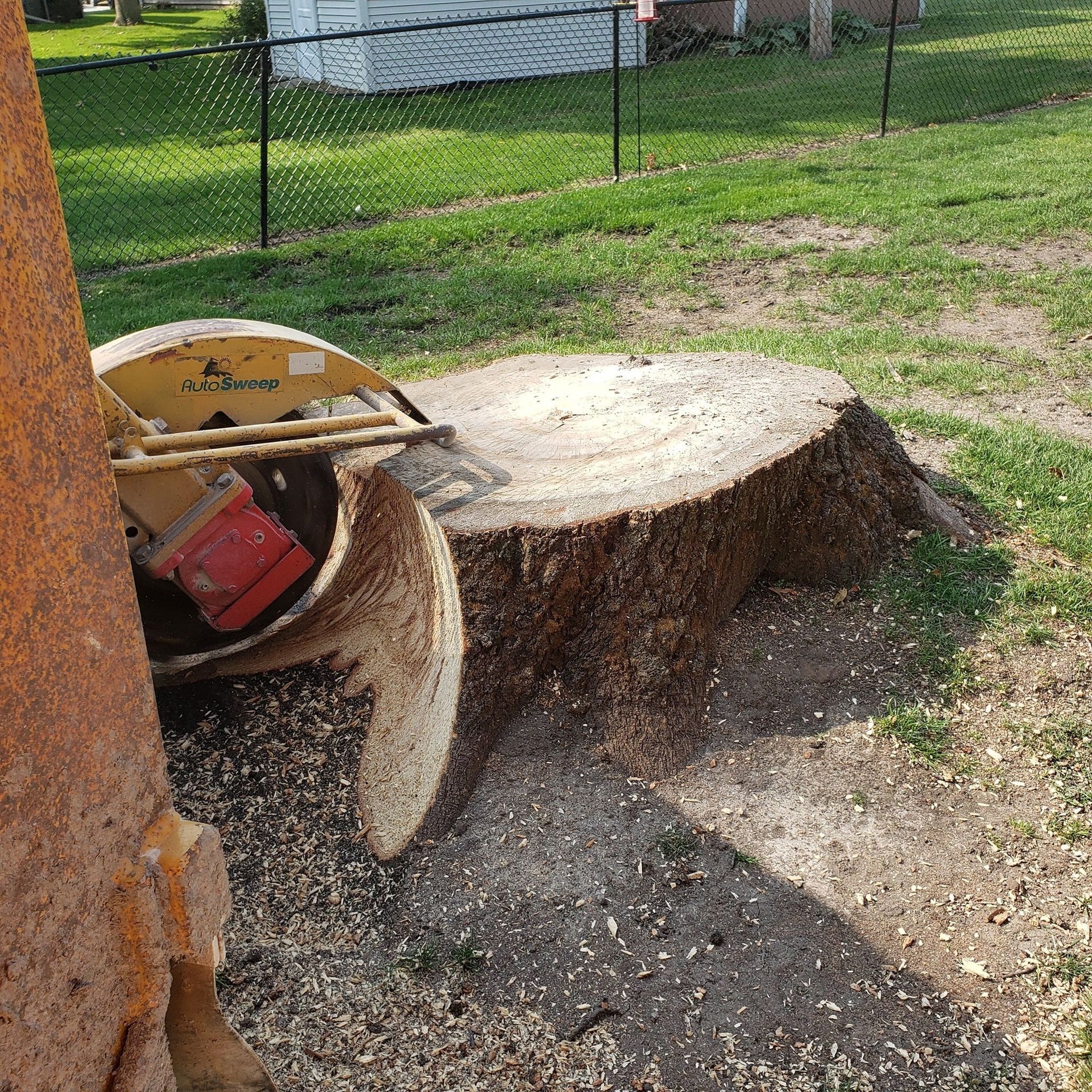
The grinding process uses a rotating cutting wheel to reduce the stump and surface roots into chips, typically reaching eight to twelve inches below grade depending on equipment and root structure. Kruse Tree Trim & Construction operates grinders suited to residential yards and larger rural stumps, accessing confined spaces between buildings or fences where stumps remain after earlier removal work.
Arrange a site visit to evaluate stump diameter, root spread, and access limitations that affect equipment selection and grinding depth.
What Stump Grinding Accomplishes on Your Property
Grinding reduces the stump to wood chips and sawdust that fill the resulting depression, leaving a level surface once settled. The grinding wheel cuts through wood and surface roots but leaves deeper roots underground where they decompose naturally without sending up new shoots, since the energy-storing stump mass is gone.
After grinding, you notice the eliminated tripping hazard, unobstructed mowing paths, and reclaimed space for planting or construction. The wood chip pile can be spread as mulch, mixed into soil, or removed entirely depending on your landscaping plans, and the ground settles over several weeks as the chips compact and decompose.
Grinding does not remove every fragment of root tissue, so small subsurface roots remain and break down over time. Properties preparing for construction or paving over the stump location may require additional excavation to remove larger root sections, while lawn restoration simply needs topsoil added over the settled chips before seeding.
Common Concerns About Stump Grinding
Property owners scheduling grinding want to understand what remains afterward and how the site will look.
What depth does grinding typically reach below ground level?
Most residential grinding reaches eight to twelve inches below grade, which prevents regrowth and allows lawn restoration, though deeper grinding is possible if construction or drainage work requires additional clearance.
How does stump size affect the volume of chips produced?
A twenty-four-inch diameter stump produces roughly two to three cubic feet of chips, while larger stumps from mature trees create significantly more material that must either be spread on-site or hauled away.
When should grinding be scheduled after tree removal?
Grinding can occur immediately after removal or months later, though freshly cut stumps are easier to grind than those left to harden over time, and delaying allows you to address multiple stumps in one session.
Why do some stumps require more grinding time than others?
Dense hardwoods like oak grind more slowly than softer species, and stumps with extensive surface root flare require additional passes to level the surrounding area completely.
What preparation is needed before the grinder arrives in Williamsburg?
Clearing rocks, decorations, and irrigation components within several feet of the stump prevents equipment damage, and marking underground utility lines ensures safe grinding near buried infrastructure.
Kruse Tree Trim & Construction removes stumps from residential and commercial properties across Johnson County, handling individual stumps or multiple remnants from land clearing projects. Call (319) 662-4257 to schedule grinding and discuss chip removal or spreading preferences based on your site plans.