Trimming That Prevents Storm Damage and Decline
Tree Trimming in Williamsburg for properties with overgrown branches, deadwood accumulation, or structural imbalance
Branches crossing roof lines drop leaves into gutters and create abrasion points during wind movement, while limbs extending over driveways become hazards during ice accumulation when their weight increases beyond what the attachment point can support. Trimming removes deadwood that breaks loose during storms, thins crowns to reduce wind resistance, and establishes clearance around structures before branches grow into contact with siding or shingles. Kruse Tree Trim & Construction works on residential shade trees and larger specimens on rural properties where years of neglected growth have created structural problems or safety concerns across Williamsburg and surrounding communities.
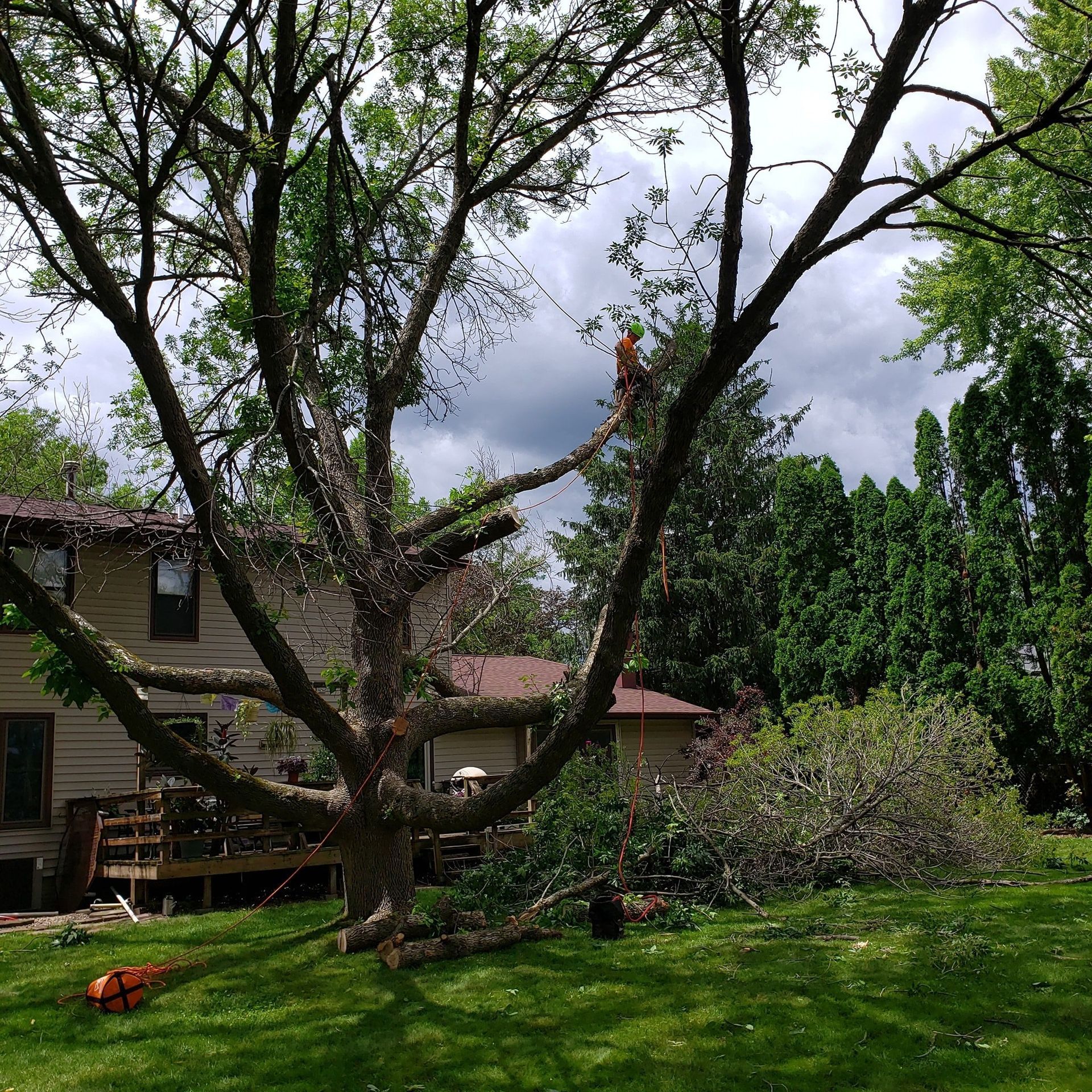
Proper trimming involves removing dead and crossing branches first, then selectively cutting to improve structure without removing so much canopy that the tree responds with rapid sucker growth. Cuts are made just outside the branch collar to allow proper wound closure, and larger limbs are rigged to prevent bark stripping as they're lowered.
Request a consultation to evaluate crown structure and identify branches that require removal for clearance or health reasons.
How Trimming Changes Tree Behavior and Risk
Trimming focuses on structural weak points where narrow crotch angles create future splitting risk, and on removing weight from limbs that extend beyond the tree's center of gravity. Deadwood removal eliminates the most common source of falling debris, as dead branches lose strength and drop without warning during moderate wind events that wouldn't affect healthy wood.
You notice improved clearance around structures, reduced leaf and twig debris in gutters and on roofs, and a more balanced canopy shape that sheds wind rather than catching it. Trees trimmed on a regular cycle maintain better structure over time and require less corrective work than specimens left untouched for years until severe cutting becomes necessary.
Timing affects tree response, with dormant season trimming during late fall through early spring minimizing sap loss and insect attraction to fresh cuts. Large pruning wounds on mature trees take multiple growing seasons to close, so trimming decisions account for long-term wound exposure and decay risk.
Answers to Common Trimming Questions
Trimming projects raise questions about timing, extent of cutting, and what results to expect afterward.
How much of the canopy can be removed without damaging the tree?
Removing more than 25 percent of the live canopy in a single session stresses most tree species and triggers excessive sucker growth, so trimming focuses on selective cuts rather than overall size reduction.
What's the difference between trimming for clearance and trimming for health?
Clearance trimming removes branches in specific locations to prevent contact with structures or improve access, while health trimming removes deadwood, diseased sections, and poorly attached limbs regardless of location.
When is the best time to schedule trimming in Williamsburg?
Late fall through early spring allows trimming without attracting oak wilt-spreading beetles and without interrupting active growth, though storm damage requiring urgent trimming is addressed regardless of season.
Why do some branches need to be cut in sections instead of removed whole?
Heavy limbs over structures or valuable plantings are rigged and lowered in pieces to control where they land, preventing damage from uncontrolled falling.
How does trimming affect the debris volume to be removed?
Trimming generates far less material than removal, but brush and branch sections still require chipping or hauling unless you have use for firewood or want material left for your own disposal.
Kruse Tree Trim & Construction provides trimming for residential and commercial properties where overgrowth or structural issues need correction. Call (319) 662-4257 to schedule seasonal maintenance or address urgent clearance and safety concerns.