
Removing Trees That Threaten Buildings and Safety
Tree Removal in Williamsburg for properties with hazardous, storm-damaged, or failing trees
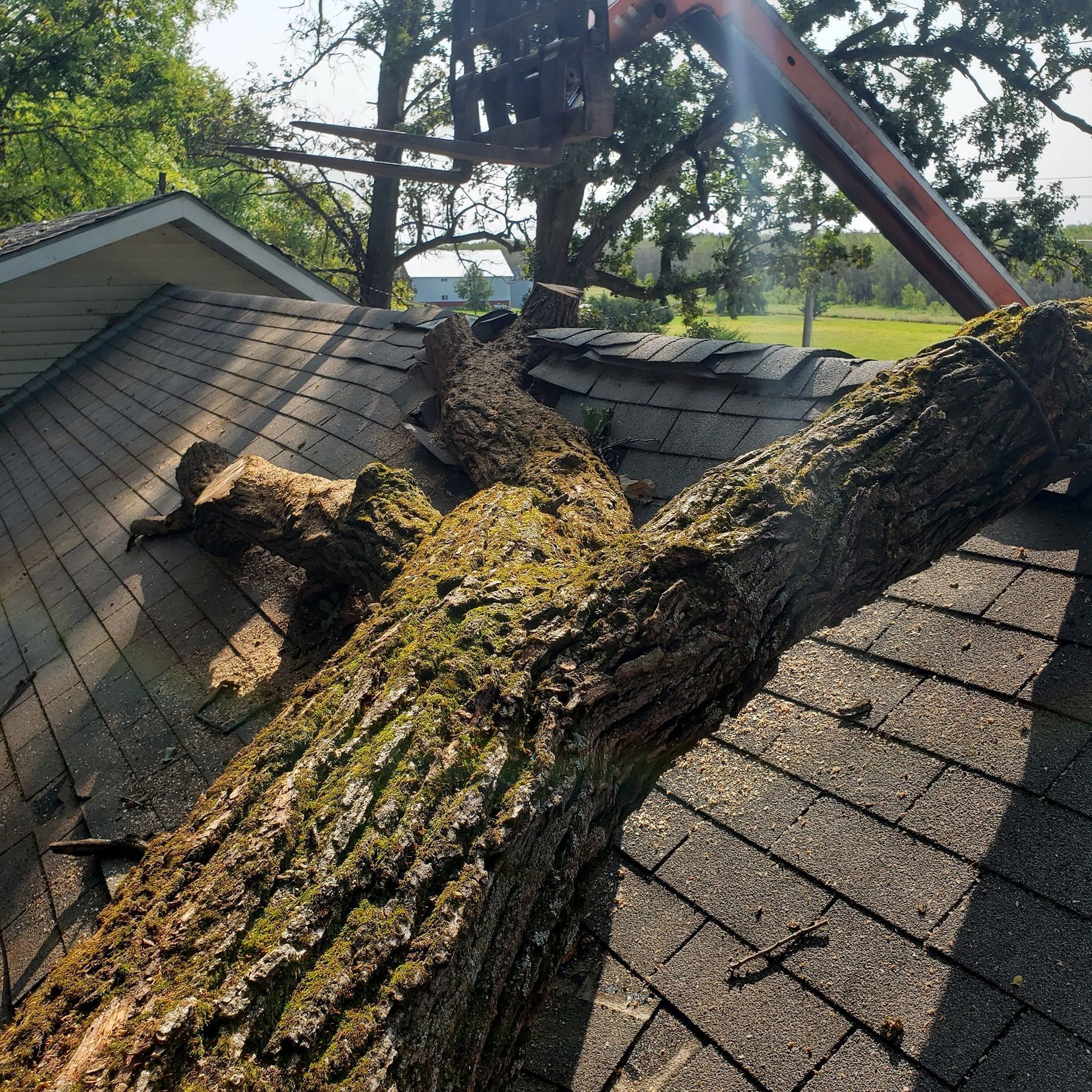
Storm damage from wind events common to eastern Iowa often leaves trees partially uprooted, leaning against structures, or split through the trunk with sections threatening to fall. Kruse Tree Trim & Construction handles tree removal across residential yards and rural properties where access limitations and proximity to buildings require precise rigging and equipment placement. You see the threat clearly when a tree drops branches during moderate winds or when root plates begin lifting soil after saturation, and removal becomes necessary before the next weather event creates property damage or blocks access routes.
The process involves assessing fall zones, rigging sections where dropping the entire trunk would damage fences or utilities, and using equipment suited to confined spaces or soft ground conditions. Trees located near power lines, over septic systems, or within feet of foundations require controlled dismantling rather than felling, and removal includes cutting the trunk into manageable sections before clearing debris from the property.
Schedule a property evaluation to assess specific access challenges and plan removal sequencing for multiple trees.
What Happens During and After Tree Removal
Removal begins with clearing ground-level obstacles and identifying anchor points for rigging ropes when sections must be lowered rather than dropped. For trees over driveways or near structures, limbs are removed first to reduce weight and allow controlled lowering of trunk sections, preventing ground impact that could crack pavement or damage underground lines.
After the tree is down, you notice open sight lines that were previously blocked, elimination of the hazard that concerned you during storms, and cleared ground where branches once overhung roofs or driveways. Debris is cut into transportable lengths and either stacked for your use as firewood or hauled away entirely, leaving the area clear for immediate lawn restoration or construction access.
Removal does not include stump grinding unless specifically requested, so a flush-cut stump typically remains at ground level. Properties with multiple dead or declining trees benefit from staged removal during dry soil conditions when equipment travel causes less rutting across lawn areas.
Questions Property Owners Ask Before Removal
Tree removal projects in Williamsburg raise practical concerns about safety, timing, and what the service includes.
What determines whether a tree must be removed in sections instead of felled whole?
Trees within falling distance of structures, fences, or utilities require sectional dismantling using ropes and rigging to control each piece as it's cut, while trees in open areas can often be dropped directionally if ground conditions and space allow.
How does equipment access affect scheduling for rural properties?
Wet soil conditions from spring thaw or extended rain periods limit heavy equipment travel, so removal work on farm properties or large lots is often scheduled during frozen ground or dry summer months to prevent soil compaction and rutting.
What happens to the wood and debris after removal?
Trunk sections are cut into lengths you can handle for firewood if desired, or the entire volume of wood and brush is hauled away, leaving the site clear except for the stump.
When should storm-damaged trees be removed?
Trees with split trunks, hanging branches, or exposed root systems become more unstable with each additional wind event, so removal is typically scheduled as soon as access allows to prevent uncontrolled failure during the next storm.
Why do some trees require more rigging and labor than others?
Species with dense wood like oak require more cuts and heavier rigging capacity than softer woods, and trees with decay or hollow sections behave unpredictably during cutting, requiring additional safety measures and slower work pace.
Kruse Tree Trim & Construction clears hazardous and unwanted trees from properties across Johnson and Iowa County, handling both urgent storm damage and planned removals. Call (319) 662-4257 to arrange an estimate that accounts for tree size, access routes, and debris handling preferences.